
Languedoc v Provence
These southern regions of France adjoin each other so with such close proximity you’d think they’d have a lot in common, but do they?

This is my personal impression of the south of France. I’ve lived in Languedoc a long time and twenty-odd years ago I lived for a few months in Provence and still visit regularly. On a recent trip to stay with a friend in the Vaucluse department, she asked me what I thought the stand-out differences are between the two regions. This got me wondering if I could put my thoughts into words and sketches. Although I know there are differences, can I describe them?
Looming above Provence are the Prealps and then the Alps themselves, giants in the far north. Nearer to hand is the great Mont Ventoux (first sketch) that stands at 1,910 m, made famous by the Tour de France cycling race. A stone’s throw away are the incredible Dentelles de Montmirail; a row of jagged limestone peaks standing above the Gigondas and Beaumes de Venise vineyards. You could be forgiven for thinking the name indicates a row of pointed teeth for that’s what they resemble, but in fact dentelle is the French word for lace. I’ve spent a lot of time hiking through them and for me these are the most appealing of all the mountains in Provence.
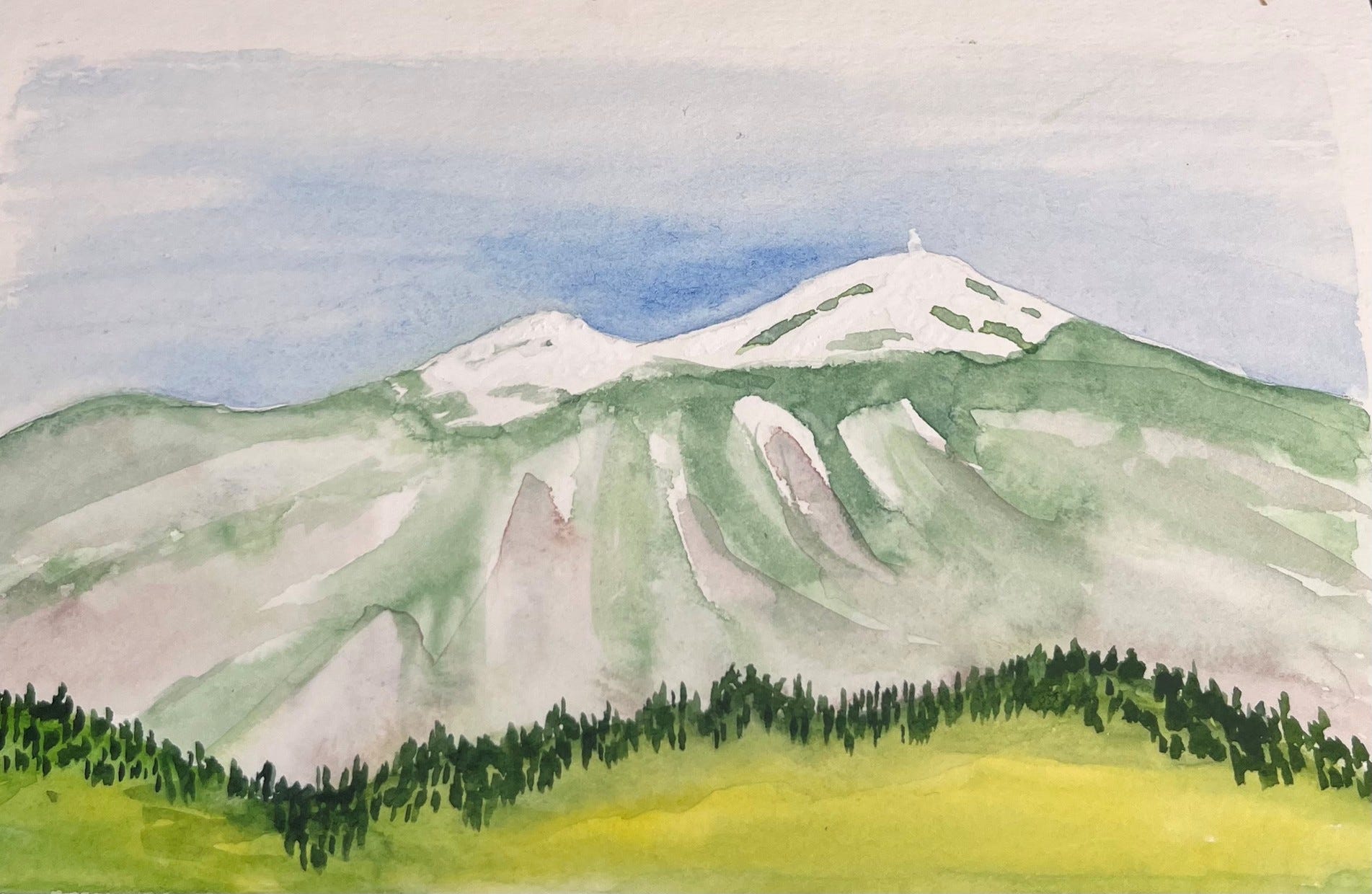
These peaks are higher than Languedoc’s, but the magnificence of our lower mountains is not diminished by their size. There’s something mystical about the Pyrenees. They are often invisible, shrouded in cloud which is why I’ve dubbed them the ‘shy mountains’. In fact, I’d lived here a full six weeks before they made an appearance and that day I couldn’t believe my eyes as I drove to my French lesson swearing they hadn’t been there the day before !
Languedoc has vast mountainous areas. The Pyrenees mark the border with Spain, then travelling east you enter the tree-clad Montagne Noire followed by the Carroux in the Haut Languedoc National Park. This place is a magnet for those seeking spectacular wilderness, solitude and wonderful walks and hikes. Continuing east are the Cevennes, sitting on the south-east edge of the Massif Central. There are several popular and probably false etymologies for the name but the one I like best is the legend of Cebena, the Goddess of Languedoc. It would have us believe that when Julius Caesar arrived in Narbonne, capital of Roman Gaul, he named the range after her.
Arriving in the south of France one of the first things that hits you is the sense of history which stretches back to early Roman times. Provence however is not all about the past, despite its ancient buildings, it has moved with the times and is firmly planted in the 21st century. The population is a little over 5 million, double that of Languedoc and it’s quite obvious there are more people, you feel it the moment you cross the border. The other thing that strikes you is the feeling of affluence. Everything is well kept, manicured even. There are many more second-homers plus tourism greatly swells the numbers during the season; the necessity to appeal to tourists ensures Provençal villages are far less scruffy than dear old Languedoc’s.
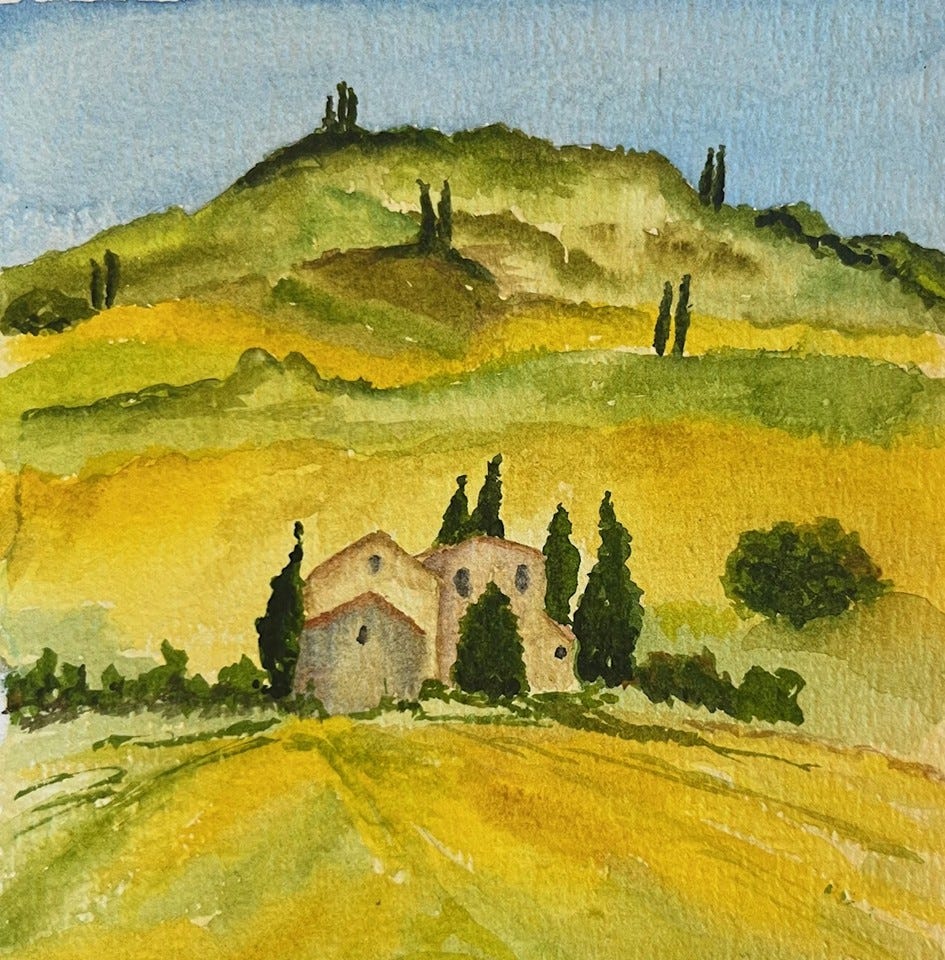
For me, less inhabited Languedoc feels wilder but being far less reliant on tourism means it’s poorer making it feel much more real. Life here is slow and it sometimes feels like I’ve stepped back into the1950’s. It’s charming in many ways but visitors are often frustrated with the long lunches and lack of urgency. But life in the Midi, as this region is called, is very family-oriented and people work only to have enough to enjoy life. Yes, there are big businesses here but on the whole things don’t revolve around making a buck or tempting tourists on every street corner.
Although the overall climate in both regions is of course Mediterranean, Provence tends to have clearer skies all year round and it was this light that lured artists there. Cezanne captured the bright colours of the landscape and people have transposed them onto the shutters of their houses, painting them apple green or azure blue. The architecture is a lot fancier than in Languedoc and one of the striking things are the ‘perched villages’, settlements built high on ridges which in the days when invasions and battles were commonplace, protected the inhabitants. The pretty houses are built from pale limestone which makes the perfect backdrop for the profusion of roses, wisteria and star jasmine that cling to the walls. In June Provence is a riot of colour with everything in the garden blooming as well as the rows of lavender striping the fields. Strolling around these villages under the shade of the ancient plane trees admiring beautiful renaissance architecture provokes a feeling of calm serenity.
Most Languedoc towns and villages were once fortified, such as Carcassonne which can look back to a violent history that includes the Cathar crusade over 800 years ago. Some perched villages can be found but we have another type of fortified village, the circulade. These villages are built in the shape of a snail shell with only one gated entrance that when shut and barred would protect the inhabitants. The architecture is plainer and the traditional stone houses are flat-fronted and often three stories high. It’s normal for them to be built on the edge of the street with no front gardens so that their doors open directly onto the road. Unfortunately, during the 1950’s there seems to have been a craze for covering the stone in what is called crépi. It resembles cement and I’m pleased to say many owners are now chipping it off to reveal the stone beneath which ranges from dark shist, much like slate, to the pale limestone also found in Provence.
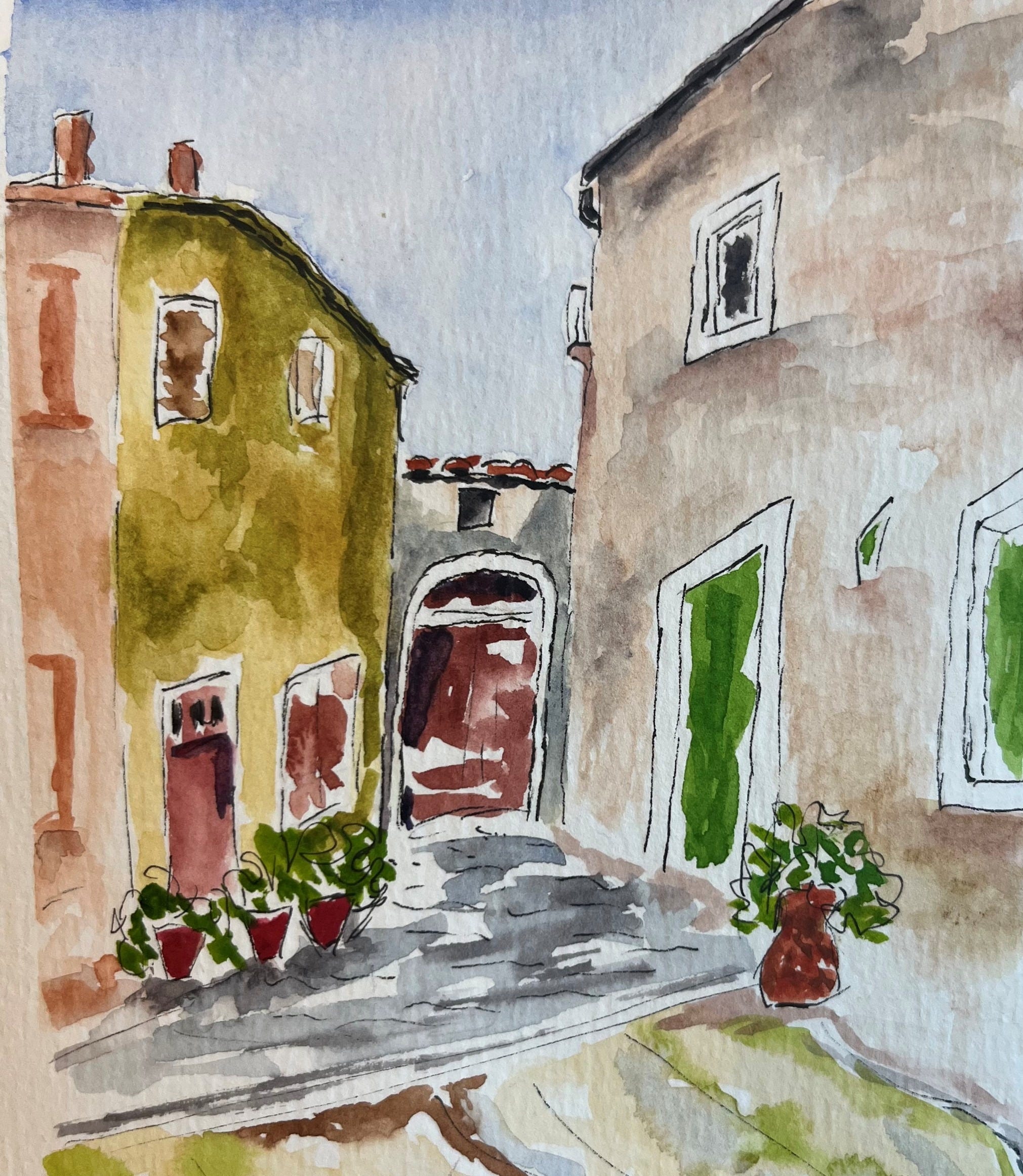
The light in Languedoc is lower than Provence due to cloud almost constantly hovering over Languedoc’s mountains and I think this might have influenced the colour palettes chosen to decorate the houses. Shutters and front doors are painted a dark brownish-red or blue-green which suits the slightly darker stone but don’t get the impression Languedoc isn’t equally as colourful as its neighbour. In the spring when the fields are crammed with wild flowers and orchids grow wild everywhere its beauty will often catch my breath. to see what I mean take a look at this video I posted on Notes recently …
You’d be hard pushed to find lavender growing commercially, for us it’s mainly fields of vines, olive groves and orchards. The dry-stone walls dividing the fields are interspersed with wild almond and cherry trees and when these blossom the landscape is punctuated with pretty dabs of pink and white. Take a look at this short video to see what I mean
In both regions, when the vines wake from their winter slumber they are soon smothered in bright green foliage pulsating with vibrancy. But I’ve noticed a change in Languedoc of late. Vines have always been the main crop with hardly anything else planted but because the consumption of wine all over the world is lowering, in harvest season I am just as likely to get stuck behind a combine harvester as a grape harvesting machine.
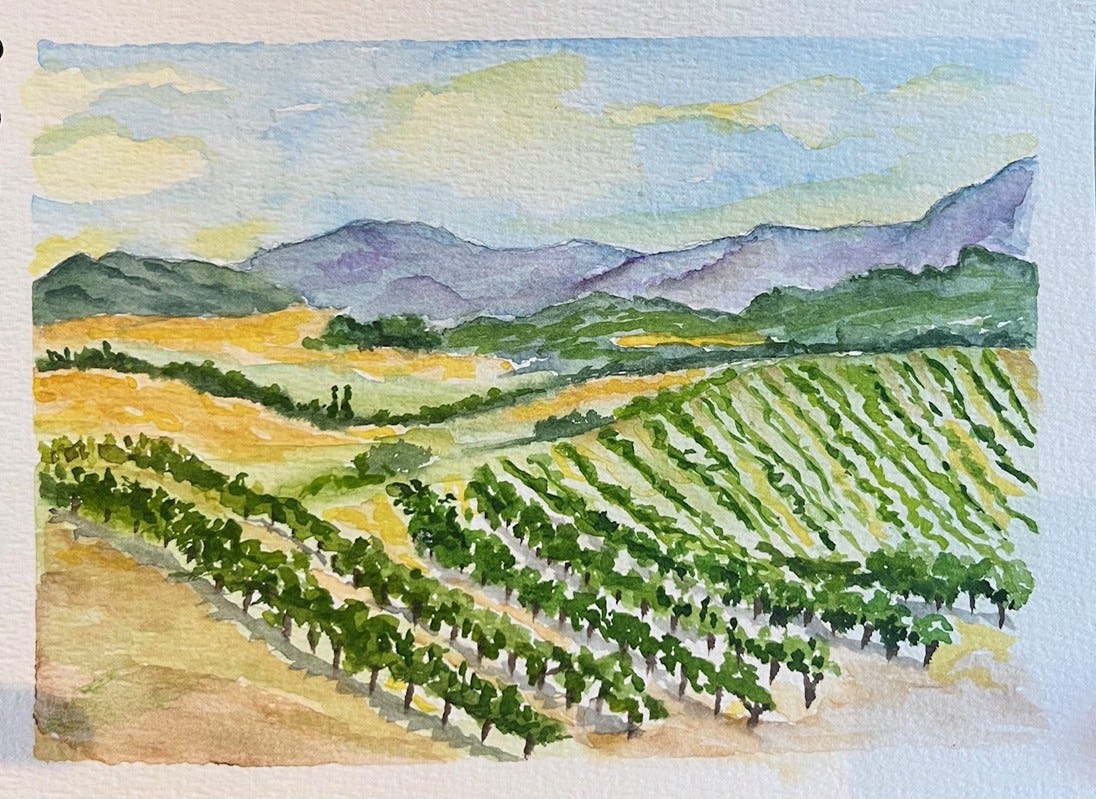
Something else both regions have in common is garrigue, the name given to the wild, low-growing scrub spread across the hillsides and edges of vineyards. It’s a mixture of herbs; rosemary, thyme, lavender and sage and bright yellow bushes of genista, or broom as we call it in English. There are also several types of juniper as well as wild olive trees, stunted oaks and small pines. As you can imagine, the natural perfume of the south is an intoxicating herby scent especially when the breeze is blowing.
Talking of breeze, the south of France is a windy place and both areas boast their own particular strong wind. In Provence it’s called the Mistral which blows fiercely down the Rhône valley often reaching incredibly high speeds. I remember waking one October morning to a vivid blue sky and bright sunshine and thinking how lovely that was only to be corrected by my neighbour. She warned of the coming wind that clears the sky of cloud as it makes its progress south.
Languedoc is probably more windy than Provence and some will tell you the names of seven winds, however the main one is the Tramontane, a classical name for a north wind. I don’t think it’s as cold as the Mistral but it can blow just as hard and is said to send men mad. Tourists in both regions might not like these cold winds but they are a blessing to locals for their cooling effect during summers high temperatures. Wine growers are also happy to have the cool aeration in the vineyards. It keeps the vines healthy after humidity or rain and because of it much less spraying against vine maladies is needed and both regions can farm organically far more easily than others.
And so to the comparison; if I were judging a beauty pageant I’d have to give first prize to Provence. It’s picture post card perfect whereas Languedoc is raw and wild. To put it simply, Provence is sophisticated and well-behaved and Languedoc feels like the intriguing country cousin who tells better stories sitting in a dusty bar with a glass of wine.
This was such a great idea for a post and the sketches are a lovely touch.
My experience is imbalanced; I've been to Provence a number of times but many of my trips date back over 20 years. I get more chance to spend time in Languedoc, which I always feel like I prefer for its more unpolished side, although some places like Montpellier and Nîmes can be pretty chic downtown -- even downtown Carcassonne now!
I hope to get back to Provence soon for my project...it's not all that far away.
I was curious what definition you used for the two areas -- the former administrative regions, or the broader cultural regions? The Tarn, for example, tends to associate itself culturally with Languedoc but was part of the former Midi-Pyrénées region, which I tend to feel lacked a bit of identity.
It's so sad about the vineyards (she says sipping a glass of rosé...)